

Startup funding advisory is the practical support that helps founders choose the right funding path and prepare properly to secure it. If you don’t know what is startup funding advisory, chances are you might also be stuck between options like investors, grants, and loans, and you do not want to waste months pitching the wrong people. This post explains how startup funding works in Canada, what an advisor actually does, and how to tell if your startup is fundable before you burn time and money.
What Is Startup Funding Advisory?
Startup funding advisory means structured guidance that helps you raise money the smart way. It covers strategy, funding readiness, the right documents, and the execution plan that matches your stage.
It is help with four things:
- choosing the right funding route,
- preparing investor grade materials,
- targeting the right funders, and
- handling the process from outreach to closing.
That matters because Canadian funding is full of options, but most founders lose momentum by applying everywhere with weak preparation.
Also, startup funding advisory is not the same thing as being a general “startup advisor.” Many startup advisors focus on mentoring, operations, and growth support. Stripe’s guide on startup advisors talks more about becoming an advisor and building relationships, not building a funding strategy and documents.
Startup Funding Explained
Startup funding is money used to build and grow a business before revenue is strong enough to fuel growth.
Funding exists because startups usually face early costs that arrive before cash does. For example, product development, hiring, marketing, certifications, and long sales cycles can hit hard in Canada.
So, why do startups need funding?
Because speed matters. If a startup moves too slowly, competitors win customers first. If a startup moves too fast without runway, it runs out of cash.
How Startup Funding Works in Canada
In Canada, funding usually follows a predictable flow.
First, you choose the type of funding. Then you prepare the right materials. After that, you approach the right targets, and finally you go through due diligence and terms.
Venture funding includes pitching, investor interest, due diligence, and a term sheet outlining valuation and deal terms.
Here’s the bigger picture.

Funding Types in Canada
Canada offers both non equity funding and equity funding. Non equity options are popular because they can reduce dilution. Still, equity can be the fastest way to scale if traction is strong.
| Funding Type (Canada) | Best Fit Stage | Typical Use | Biggest Advantage | Main Trade Off |
|---|---|---|---|---|
| Bootstrapping | Early | MVP, early ops | Full control | Slow growth |
| Friends and Family | Early | First runway | Flexible | Risky relationships |
| Angel Investors | Early | Launch and traction | Experience + networks | Equity dilution |
| Venture Capital | Growth | Scaling fast | Larger cheques | High expectations |
| Grants | Early to growth | Innovation projects | Non dilutive | Competitive and slow |
| Business Loans | Traction | Working capital | No equity | Repayment pressure |
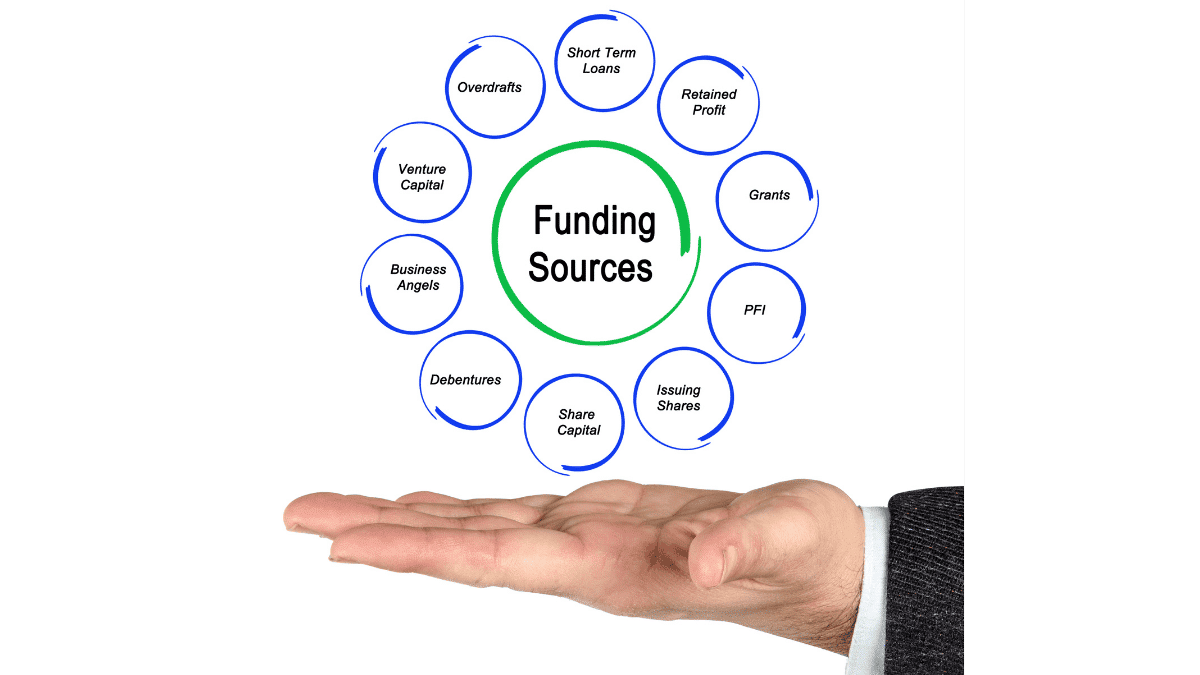
BDC lists common startup financing sources like personal investment, angels, venture capital, crowdfunding, incubators, grants, and business loans.
Most Common Startup Funding Options in Canada
Founders usually pick from a small set of funding routes, even though the ecosystem feels huge.
BDC highlights how angels often invest early and can add serious value through experience and networks.
Meanwhile, VC is usually later, once there is proof of growth potential.
If you are exploring business startup funding in Canada, the main idea is to match the funding type to the stage. That simple rule avoids most mistakes.
Canada Government Startup Funding
Start with programs designed to support innovation and early business growth.
One of the most important options for innovative companies is NRC IRAP.
NRC IRAP’s mission is to accelerate the growth of small and medium sized businesses through innovation services and funding.
NRC also clearly states it provides advice, connections, and funding to help Canadian businesses increase innovation capacity and take ideas to market. [National Research Council Canada]
For research heavy businesses, SR&ED is another major lever.
The CRA explains that the SR&ED program provides tax incentives that can reduce income tax payable, and it includes deductions and investment tax credits.
AI and Tech Startup Funding in Canada
Many founders look for AI startup funding in Canada or Canada tech startup funding because tech feels like it has more opportunities. Sometimes it does, but the rules stay the same.
Tech still needs proof.
AI still needs a customer story.
Innovation still needs documentation.
Programs like IRAP and SR&ED can be relevant for tech and R&D driven teams.
Still, when you pursue tech startup funding in Canada, expect tougher stuff, including:
- real differentiation
- defensibility
- compliance and risk
- measurable traction
What a Startup Funding Advisor Actually Does (Start to Finish)
This is where startup funding advisory becomes very real.
A funding advisor does not just “help you raise money.” They build structure around the messy parts.
A strong advisory process usually includes the following:
Funding strategy
You decide how much you need, what it is for, and what runway it buys. This prevents random fundraising that never ends.
Funding route selection
You match your stage to the best route, such as grants, loans, angels, or VC.
Investor grade documents
Most funding decisions are document driven. That is why investor documents matter.
👉 If you want the details, we break down planning fundamentals in how to write a business plan.
Execution support
This includes outreach structure, pitch readiness, and basic due diligence preparation.
At SAZ Square, we also publish our approach clearly, so founders know what happens first and what happens next. See our process.
Which Startups Need Funding (And Which Don’t)
This question is bigger than it sounds. Because if you raise too early, you dilute too early. However, if you raise too late, you lose the window.
Startups that usually need funding early include:
- product or tech builds with long development cycles
- regulated industries with compliance costs
- teams that must hire fast to win market share
On the other hand, many service businesses can grow through revenue first. That matters if you are exploring small business startup funding in Canada and trying to decide if equity is worth it.
If you are still deciding between starting fresh or buying something established, our piece Start vs Buy Business can help.
Why Funding Is Required by Startups
People ask why funding is required by startups because they feel pressure to raise, even when they are not ready.
Here is the honest breakdown. Funding is used for:
→ Product build and delivery
You cannot scale what does not exist. Funding buys build time.
→ Hiring and payroll runway
Talent is expensive, especially in tech hubs.
→ Sales and marketing execution
A great product without distribution still dies.
→ Working capital
Even profitable startups can fail if cash timing is bad.
When founders understand this clearly, they stop raising “because everyone else is raising.” They raise for a specific result.
Will This Startup Get Funded?
This is the question founders ask privately: will this startup get funded?
The answer depends on the type of funding you want.
Lenders care about stability and repayment ability.
Investors care about growth potential and upside.
Startup Funding Readiness Checklist
Here is a simple table founders can use before pitching.
| Fundability Signal | What It Means | Why It Matters |
|---|---|---|
| Clear problem and buyer | Real pain, real customer | Investors fund clarity |
| Traction proof | Users, pilots, revenue, waitlist | Reduces guesswork |
| Solid unit economics logic | How the business makes money | Protects margins |
| Realistic plan for use of funds | Where money goes in 6 to 18 months | Prevents waste |
| Credible team execution | Skills match the problem | Improves confidence |
| Clean documentation | Deck, plan, model, assumptions | Enables due diligence |
If the top half of this table is weak, funding becomes slower and more expensive. That is exactly why startup funding advisory matters. It forces readiness before exposure.
How to Get Funding for a Startup in Canada
If you want a practical path, follow this order.
→ First, define the funding goal.
Choose an amount, timeline, and outcome.
→ Next, pick the funding route.
Non dilutive options can be smart early. Equity can be powerful when traction is strong.
→ Then, prepare the documents.
A pitch deck without numbers is a story. A financial model without a story is noise.
→ After that, run outreach with structure.
Target the right people and track every conversation.
→ Finally, prepare for due diligence.
Investors will ask for proof, not promises. RBCx highlights due diligence as a key step before a deal closes.
If you are starting from scratch and need a Canada-focused foundation, see how to start a business in Canada.
Startup Funding in Toronto, Vancouver, Ontario, and Alberta
Founders also look for startup funding in Toronto, startup funding in Vancouver, startup funding in Ontario, and startup funding in Alberta because local ecosystems matter.
Toronto and Ontario are strong for tech networks, events, and investor density. Vancouver is active too, especially across innovation communities. Alberta has strong regional programs and a growing tech ecosystem.
However, location does not replace readiness. A weak pitch stays weak in every city.
Common Mistakes Funding Advisory Helps You Avoid
Most startups do not fail because they cannot raise. They fail because they raise at the wrong time, from the wrong place, with the wrong preparation.
The most common mistakes look like this:
- pitching before the business story is clear
- chasing VC when the startup fits grants or loans better
- projecting unrealistic numbers with no assumptions
- raising without a real plan for how money creates growth
BDC’s overview of funding routes shows how many choices exist. Still, the right choice depends on context and not hype.
What to Ask Before Hiring a Funding Advisor
A funding advisor should bring structure, not confusion.
Before working with anyone, ask:
- What funding routes do you support in Canada?
- Do you help build the documents or only give advice?
- How do you decide if a startup is fundable?
- What is the timeline for preparation and outreach?
Also, understand the difference between funding advisory and general startup advising. Some advisors are compensated through advisory equity or advisory shares, which is a separate topic from funding strategy.
Final Takeaway
Now you have a clean answer to what is startup funding advisory and how it fits the Canadian funding landscape.
If a founder wants to move faster, the winning move is simple. Build funding readiness first, then raise. That order saves months.
When you are preparing investor documents, clarity matters. Numbers matter. Proof matters. And if financial statements are part of the package, check out Notice to Reader Financial Statements Canada.
If you want to learn the investor side too, see how to find Angel investors.
FAQs
Why do startups need funding?
To build products, hire talent, market faster, and survive until revenue becomes predictable.
What startup funding programs exist in Canada?
Look at IRAP, SR&ED, Innovative Solutions Canada, and CSBFP, plus federal grants via Canada.ca.
Can I get startup funding without giving up equity?
Yes, use grants, loans, IRAP support, and SR&ED tax incentives instead of selling shares.
How many startups get VC funding?
In Canada, only a small percentage of companies successfully attract venture capital investment.
Is AI startup funding easier in Canada?
AI draws more VC interest, but funding stays competitive, and real traction still matters most.